Chapter I
Genuine, nothing less.
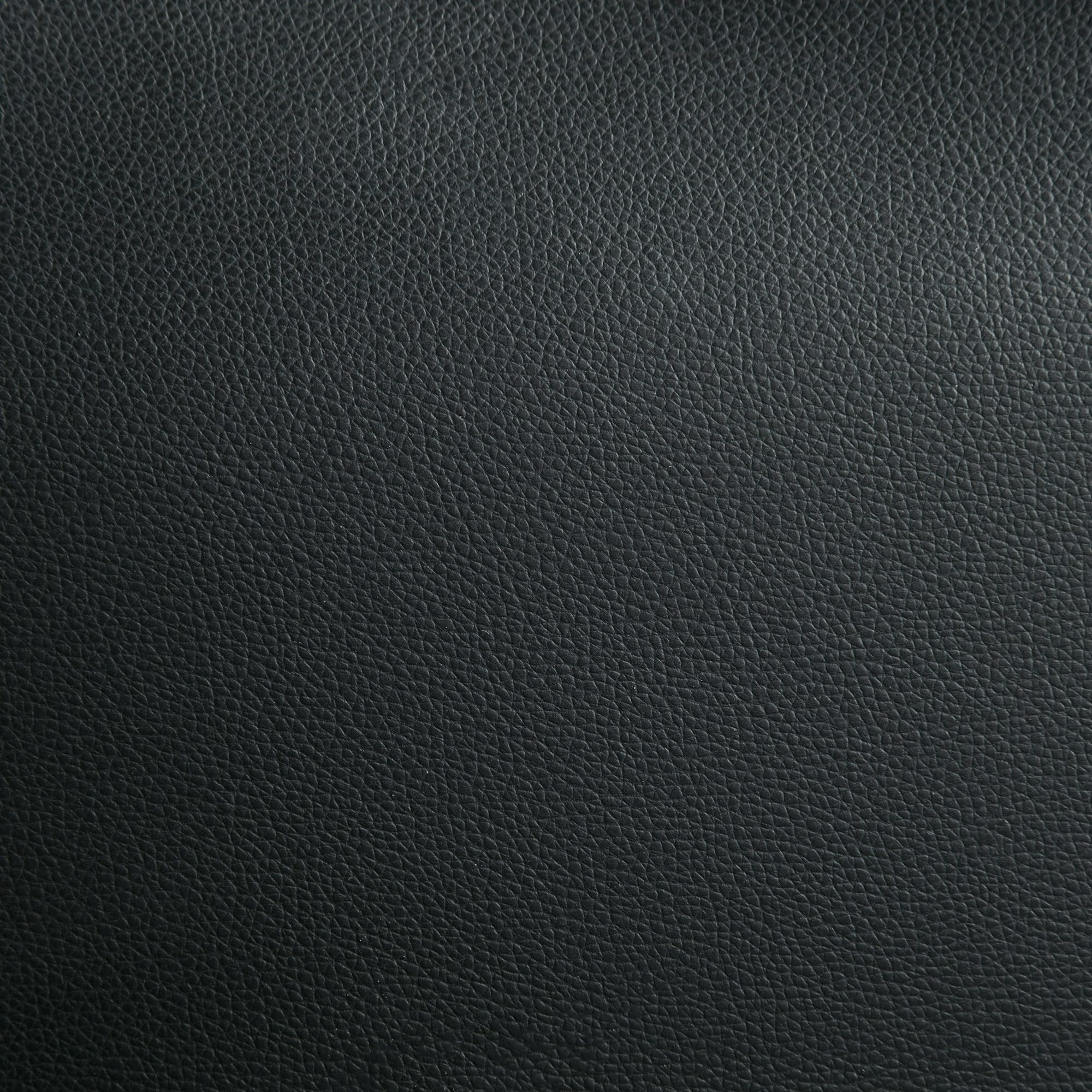
We work only with genuine leather — never bonded, coated or imitation materials. Real leather breathes, softens and shapes itself to the person who wears it, and it is the only material we trust to age well.
Our story, our craft
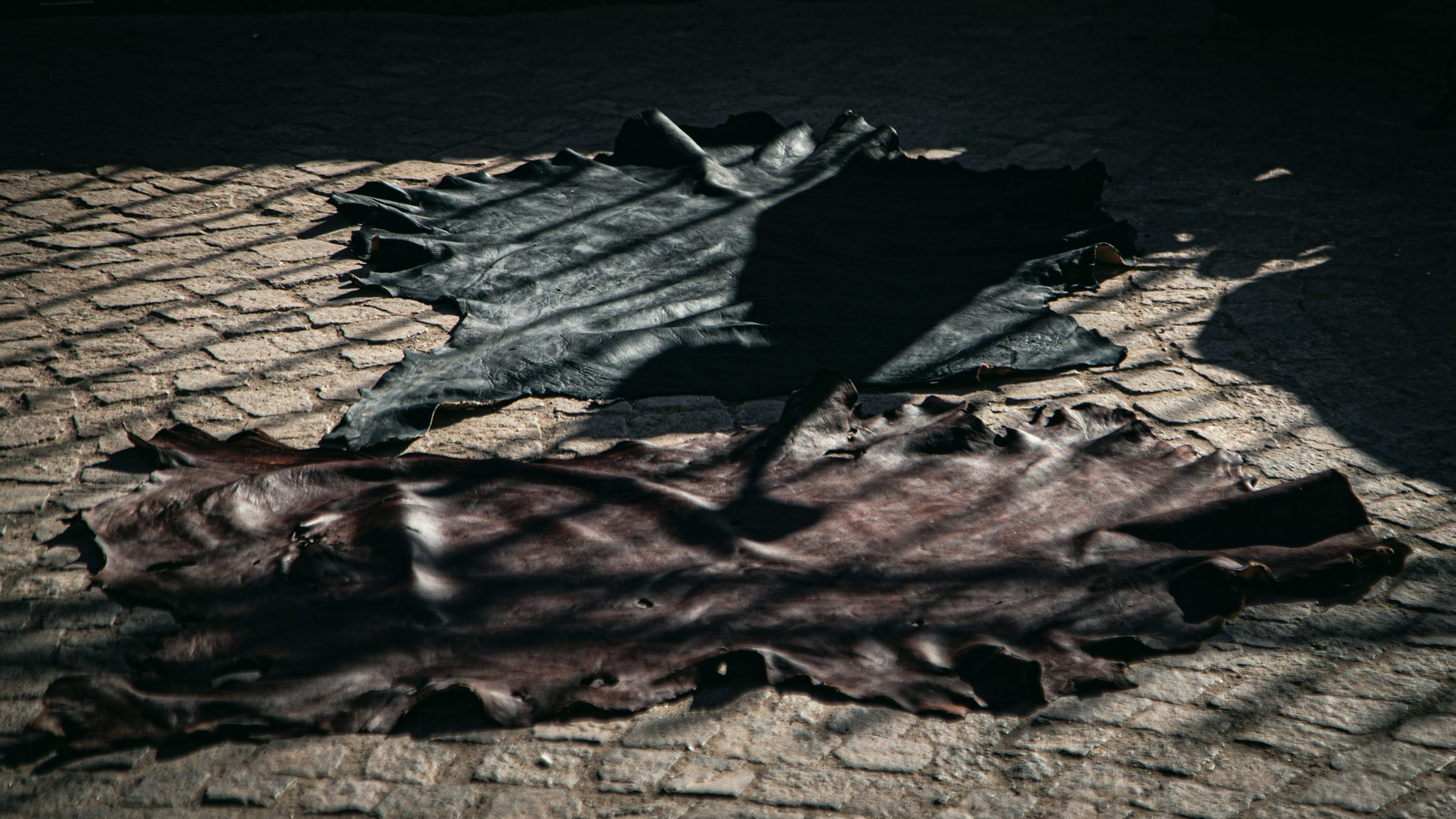
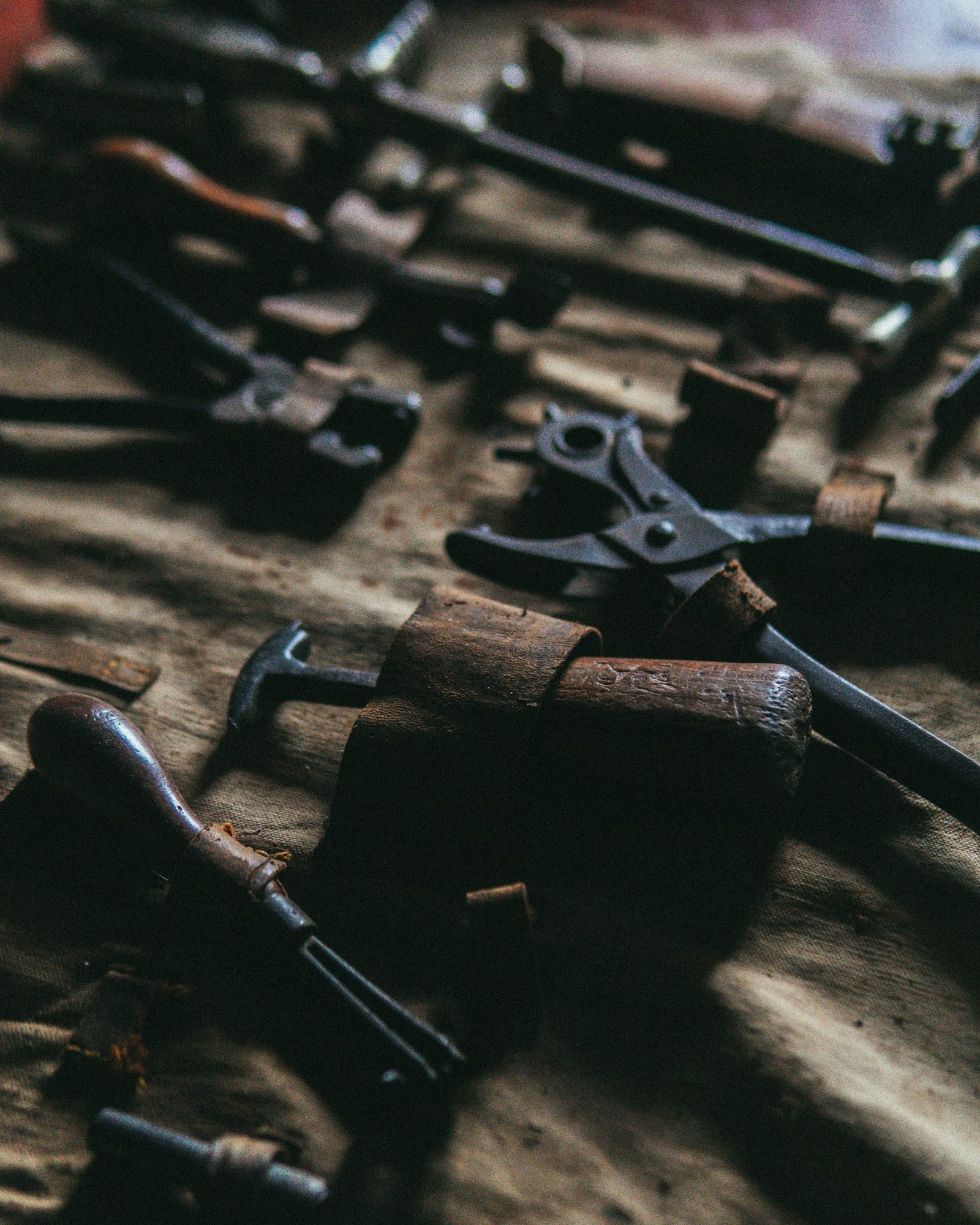
N°00Hides, before the first cut
We make few things, and we make them slowly — in genuine leather, by hand, to be worn for years and mended when they need it.
ScrollThe story
Ben.M is built on a simple idea: the things we wear and carry every day deserve to be made properly. Not more of them — better ones.
Chapter I
We work only with genuine leather — never bonded, coated or imitation materials. Real leather breathes, softens and shapes itself to the person who wears it, and it is the only material we trust to age well.
Chapter II
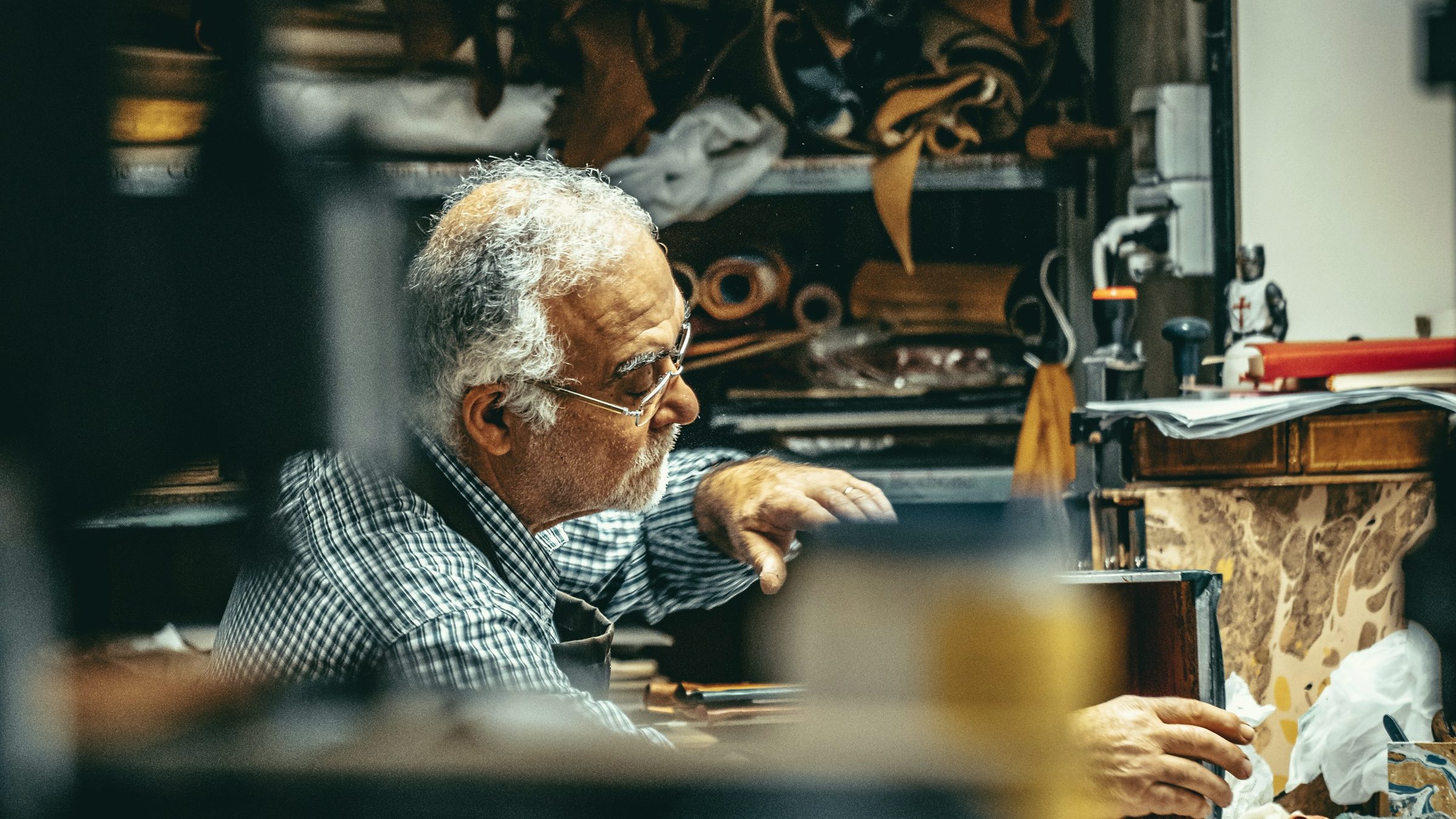
Leather cannot be rushed. Glue is left to set, edges are burnished in layers, a polish is built up by hand. Each step waits for the one before it — time is the one ingredient we never cut.
Chapter III
A well-made thing should outlive its first season, and even its first owner. So we build with seams that can be sewn again, edges that can be refinished and leather that can be polished back to life.
The craft
From the hide to the final polish, every piece passes through the same six moments. None of them can be hurried.
Scroll to follow the hide
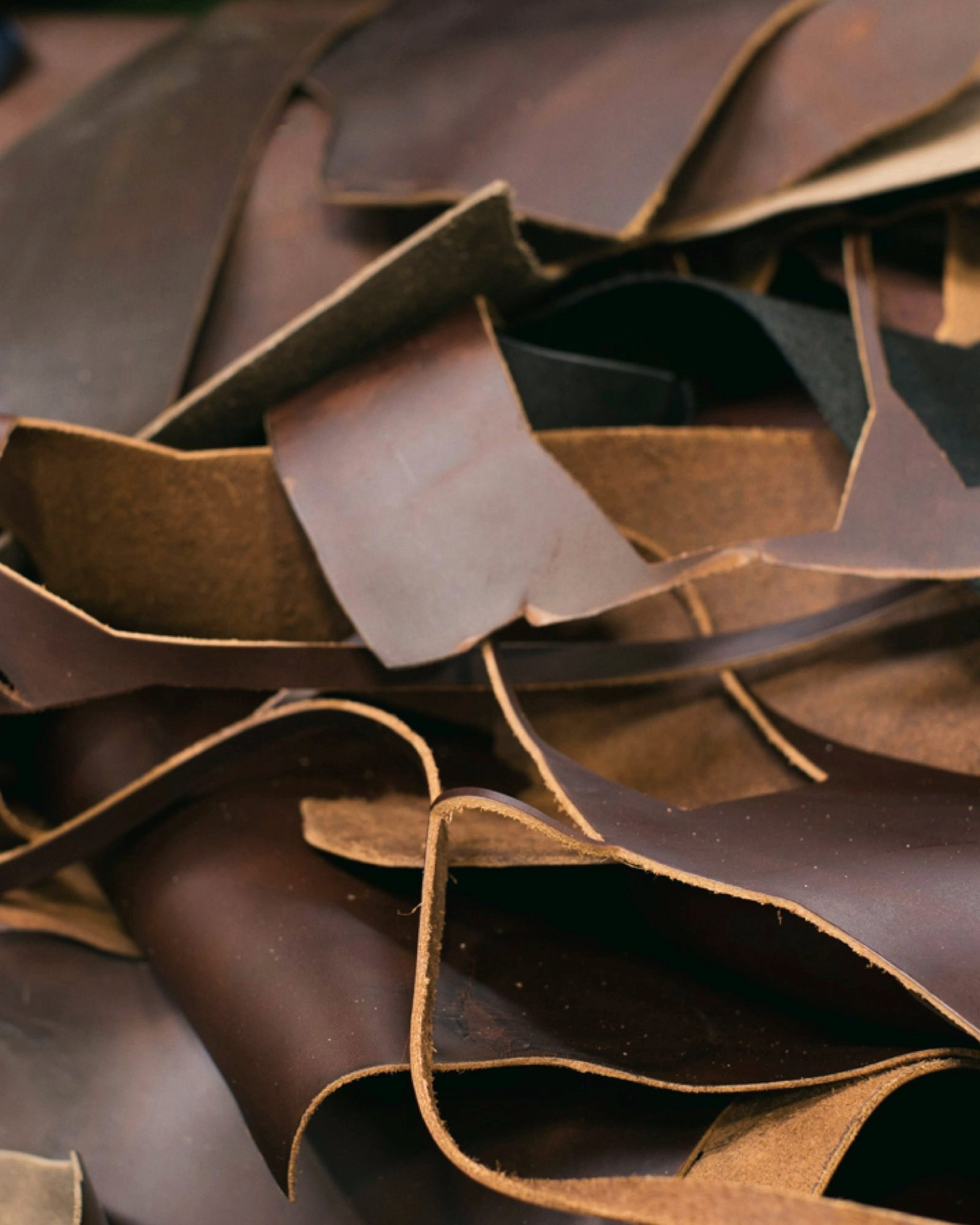
Selection
Every piece begins with a whole hide, unrolled and read in daylight. We study its grain, its thickness and its natural marks, and keep only the parts fit for a lifetime of wear.
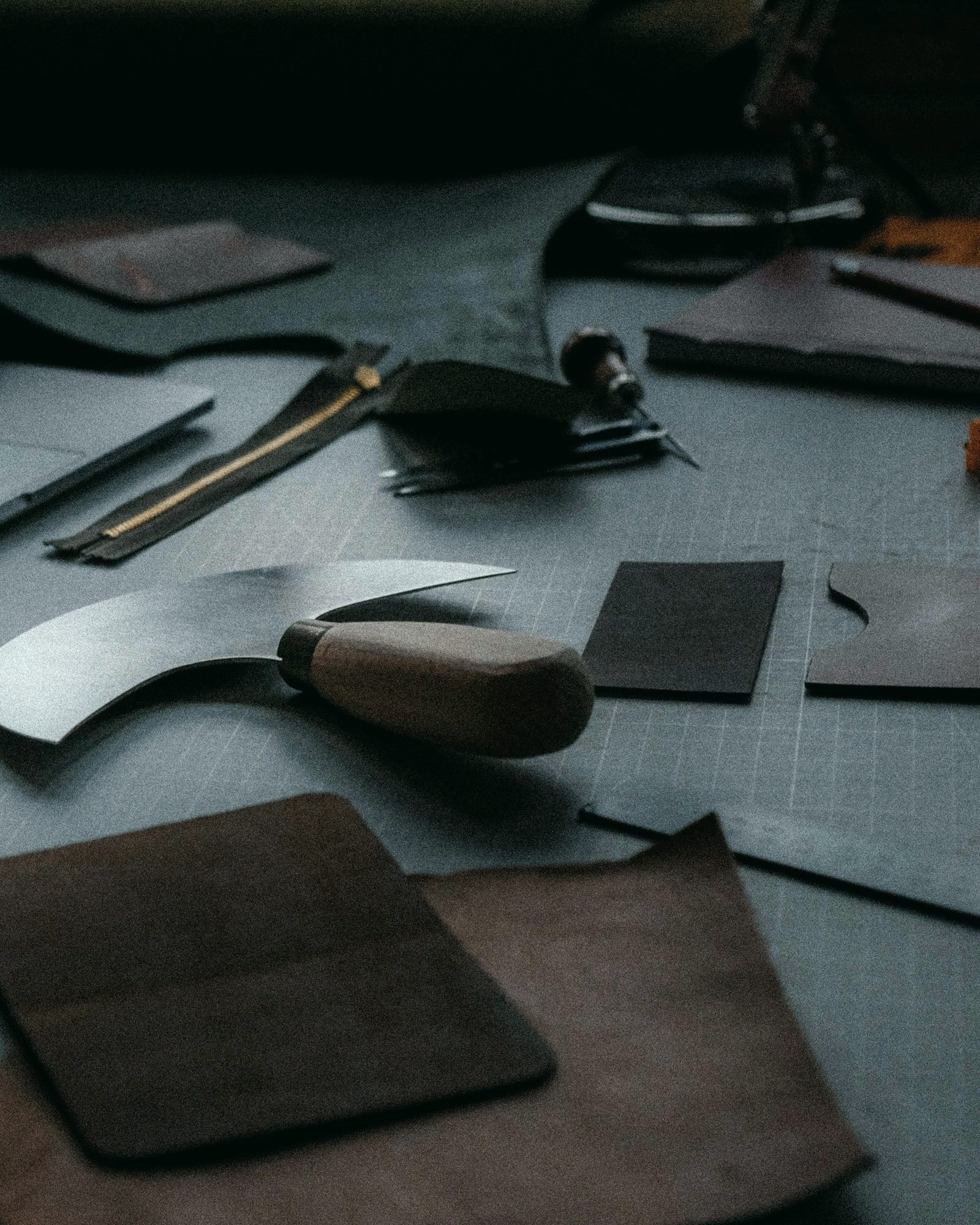
Cutting
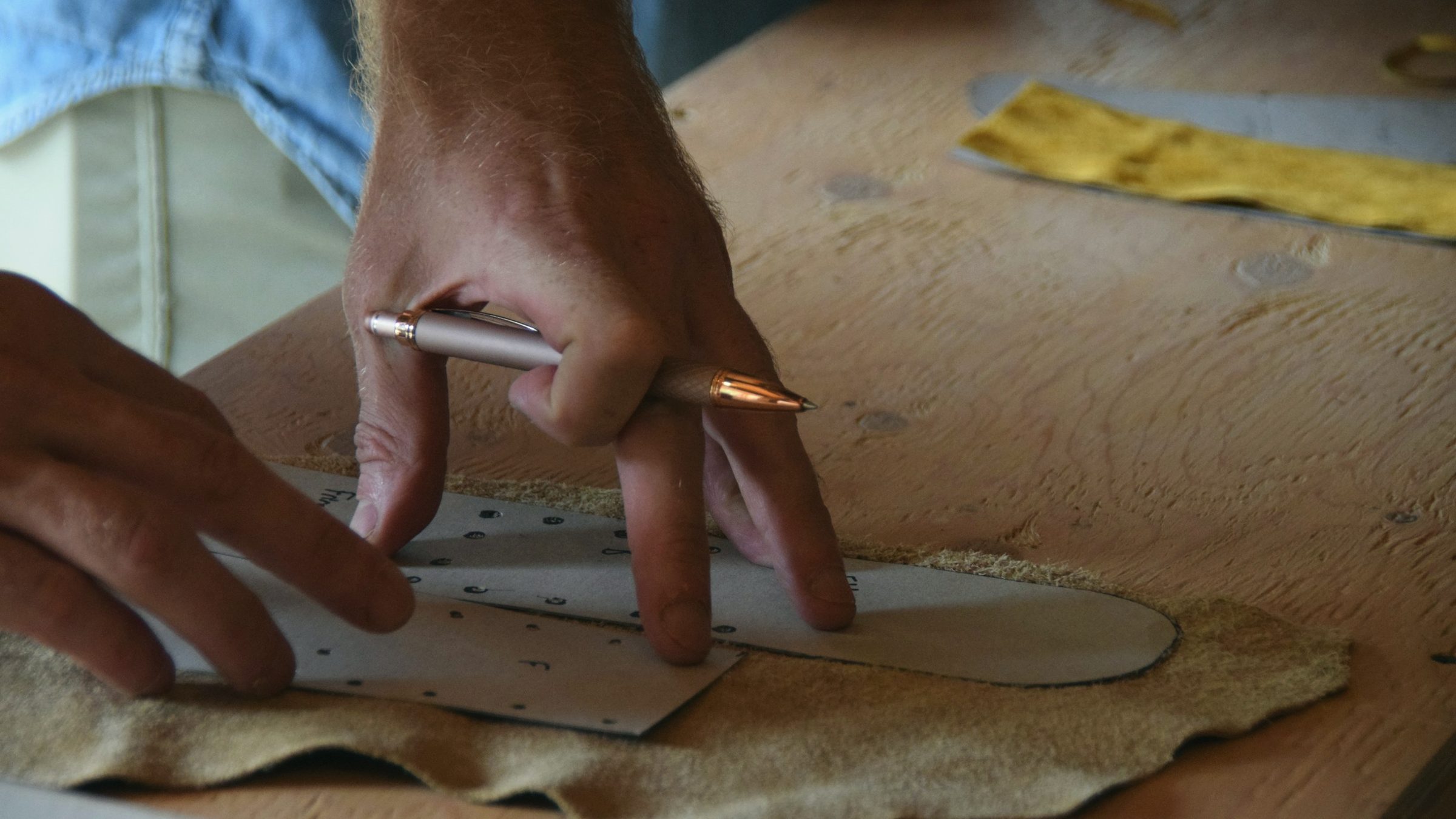
Patterns are laid on the leather and every part is cut along the direction of the grain, so the pieces stretch and settle together. Flaws are worked around, never hidden.
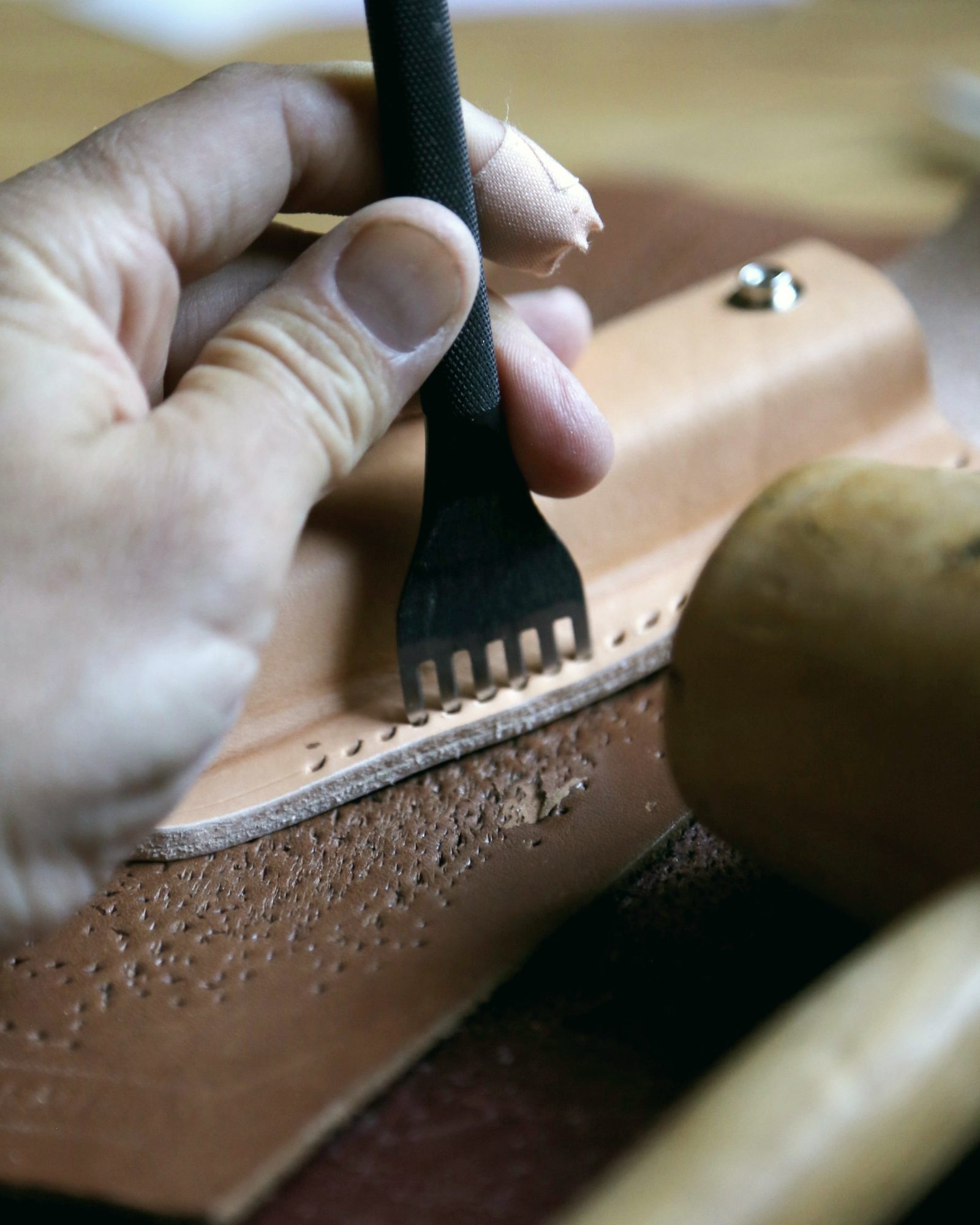
Skiving
Edges are thinned with a sharp blade so that seams lie flat and folds turn cleanly. Stitch lines are marked and the holes pricked by hand, evenly spaced.
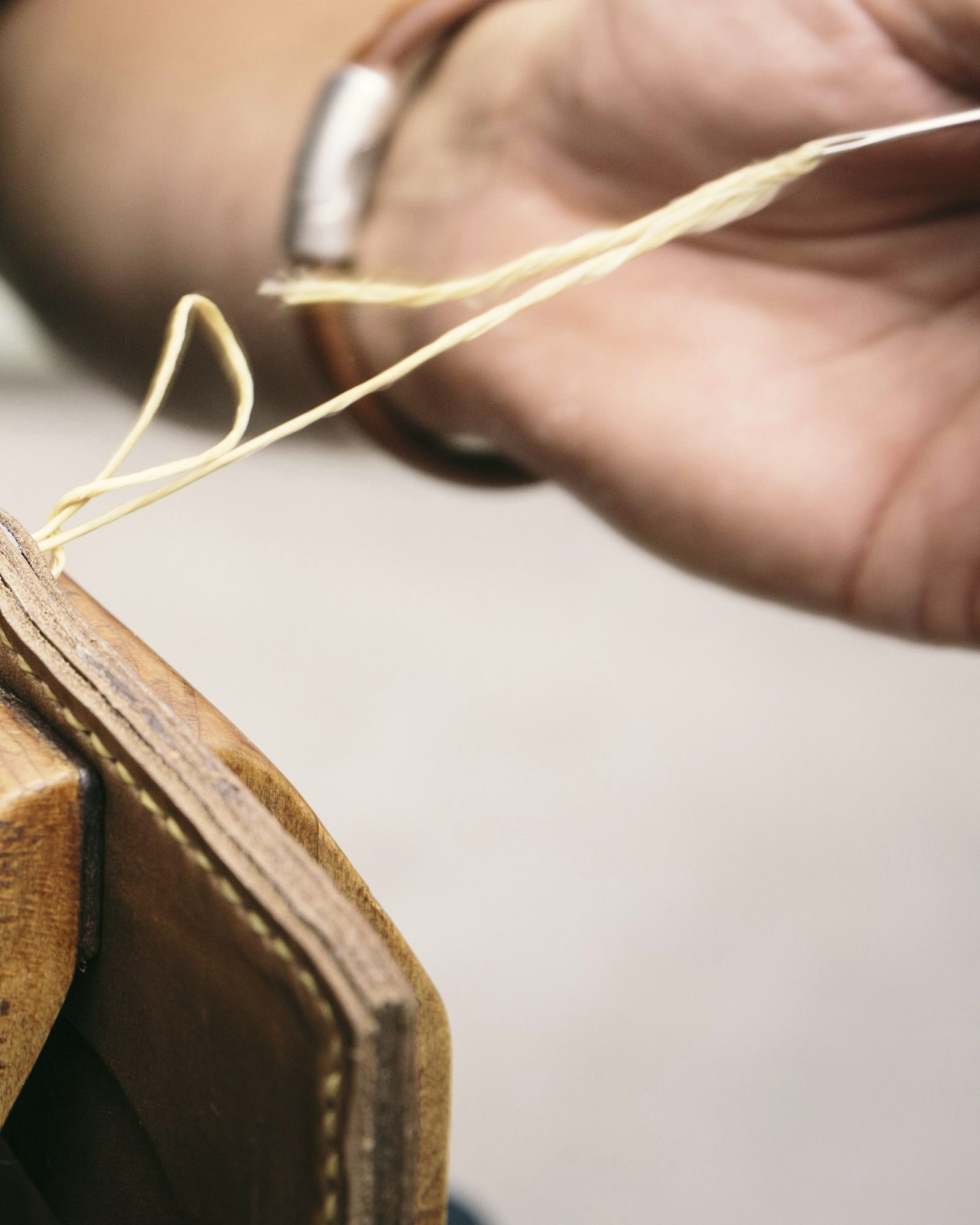
Stitching
Two needles and one waxed thread, pulled tight stitch by stitch. A saddle stitch holds even if a thread is cut — which is why it is worth every hour it takes.
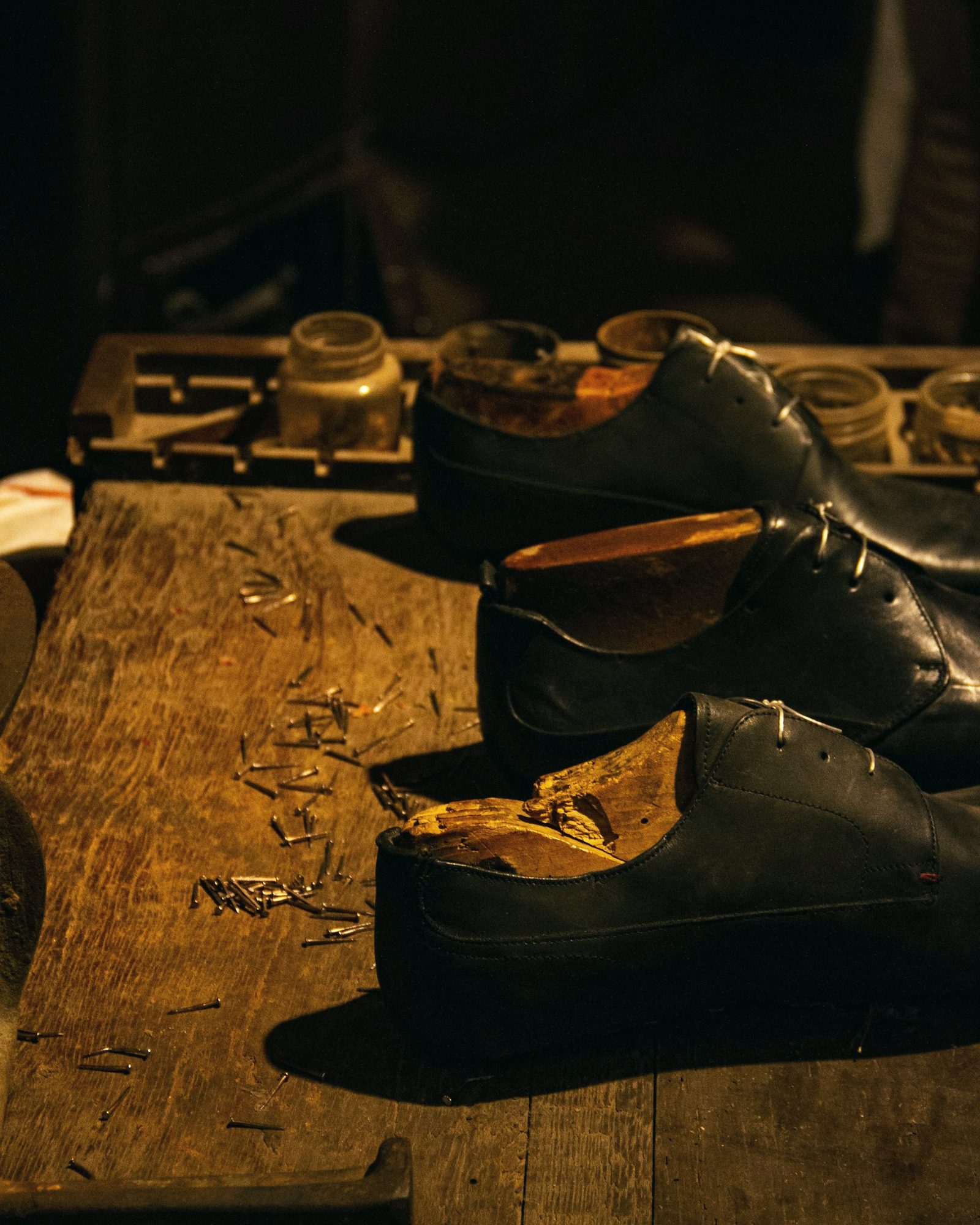
Lasting
For shoes, the upper is drawn over a wooden last and left to take its shape before the sole is attached. For bags, panels, gussets and handles come together piece by piece.
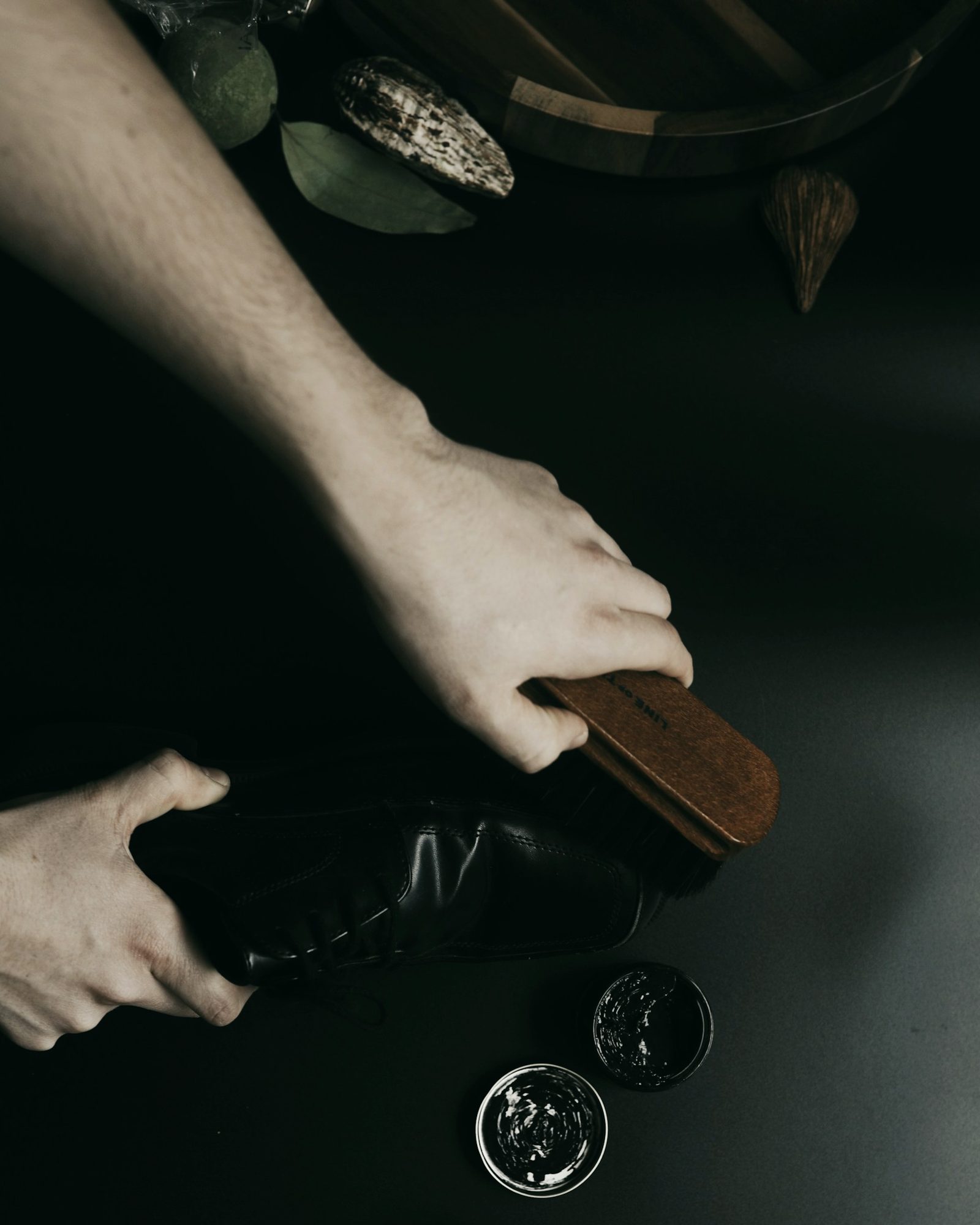
Finishing
Edges are sanded, dyed and burnished. The leather is fed, then polished by hand in thin layers until it takes on a soft, deep shine — ready to leave the bench.
From hide to hand — nothing hurried.
Discover the leathersLeathers & materials
Each leather wears, softens and ages in its own way. This is how ours look and feel — and how to keep each one at its best.
Smooth · the natural grain intact
The strong outer layer of the hide, kept whole with its natural grain. Smooth and breathable, it darkens into a rich patina with every year of wear.
CareBrush after wearing; a little neutral cream every few weeks.
Napped · the inner side of the hide
The inner side of the hide, buffed into a soft, velvety nap. Light and supple, with a deep, matt colour that catches the light as it moves.
CareLift the nap with a suede brush; protect it before the first wear.
Sanded · a fine, short nap
The outer grain, lightly sanded to a fine, short nap — softer to the touch than calf, finer and more even than suede.
CareA nubuck eraser for marks, a soft brush, and distance from water.
Grained · lively and resilient
A raised, pebbled surface with a lively texture that shrugs off scratches and keeps its shape — made for things that are used every day.
CareWipe with a damp cloth; condition lightly once or twice a year.
Shell-style · a deep, glassy shine
Calf finished with layers of wax and patient hand polishing, until the surface glows like lacquer — the classic finish of a dress shoe.
CareBuff with a soft cloth; refresh the shine with a little wax.
Plant-tanned · firm, then honeyed
Tanned slowly with natural plant extracts. Firm at first, it softens, darkens and takes on a warm, honeyed patina over the years.
CareKeep it dry and lightly conditioned; let the patina come in its own time.
Eight colours we return to, season after season. Choose one to see its character.
Our principles
Real leather, chosen hide by hide. No bonded leather, no plastic coatings, no imitations dressed up as the real thing.
Edges burnished, threads waxed, linings finished. The parts you rarely see are given the same care as the parts you do.
We design for a long life: seams that can be stitched again, soles that can be renewed, leather that can be fed and polished back to its best.
A piece is not finished when it leaves our hands. Fit, care and repair are conversations we are always glad to have.
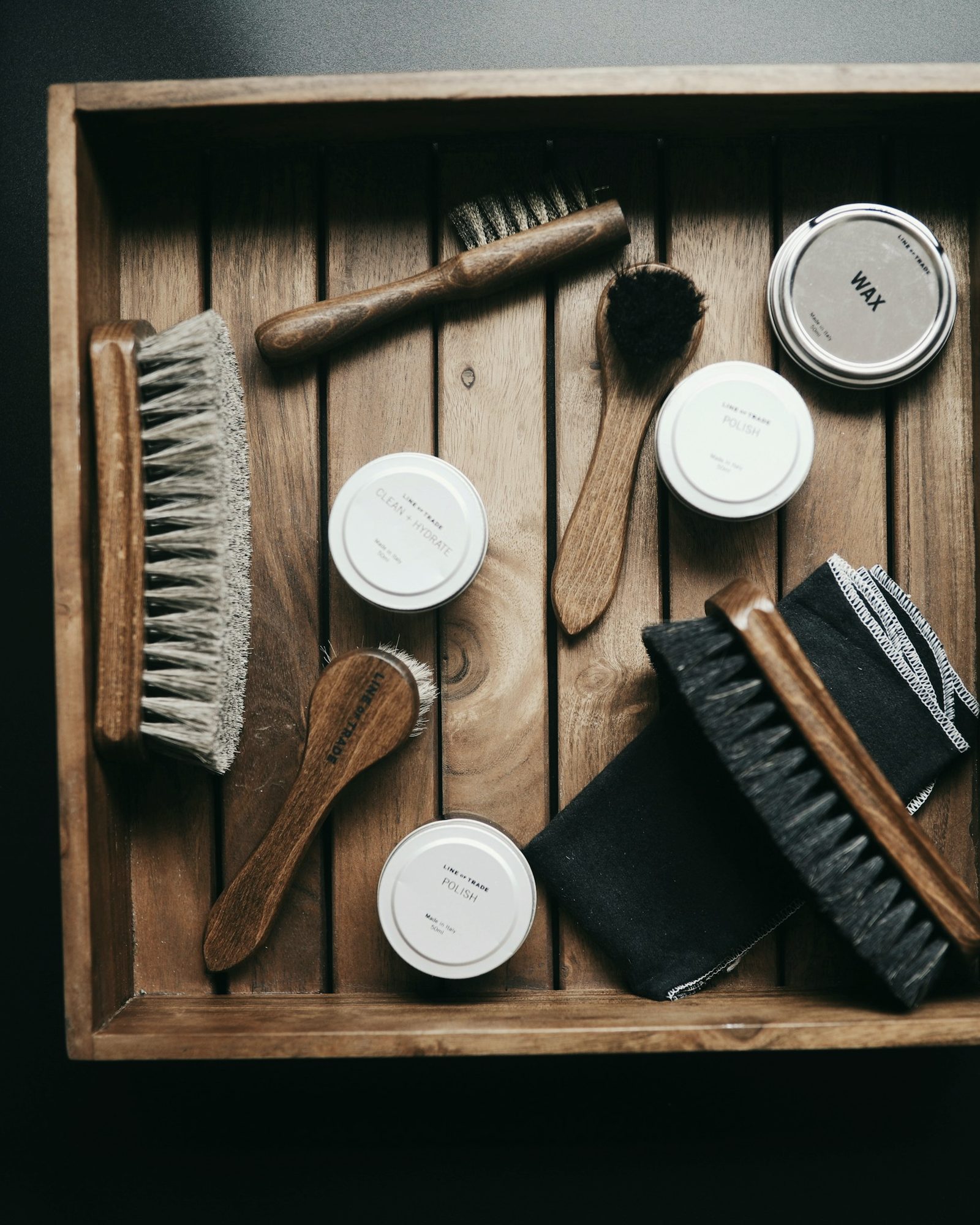
Leather care
Good leather asks for very little — some rest, a little cream and a dry place to sleep. Six habits keep it beautiful for years.
Leather needs a day to breathe. Alternate your shoes and give each pair at least a day off, so that moisture can dry out and the leather can recover its shape.
Cedar shoe trees draw out moisture and smooth the creases while the leather is still warm. Slip them in as soon as you take your shoes off.
Every few weeks, work a little neutral cream into clean leather with a soft cloth. It keeps the fibres supple and stops the surface from drying and cracking.
If leather gets wet, blot it gently and let it dry slowly, filled with paper and away from radiators or direct sun. Suede and nubuck like a protective spray before the first wear.
Brush off the dust after every wear. To polish, apply a thin layer of cream or wax in a matching shade, let it rest, then buff to a soft shine.
Keep each piece in a breathable dust bag, out of direct light. Fill bags lightly with tissue so they hold their shape, and never store leather in plastic.
Something needs more than care? Our boutiques can advise on polishing and repairs.
Care & repair questions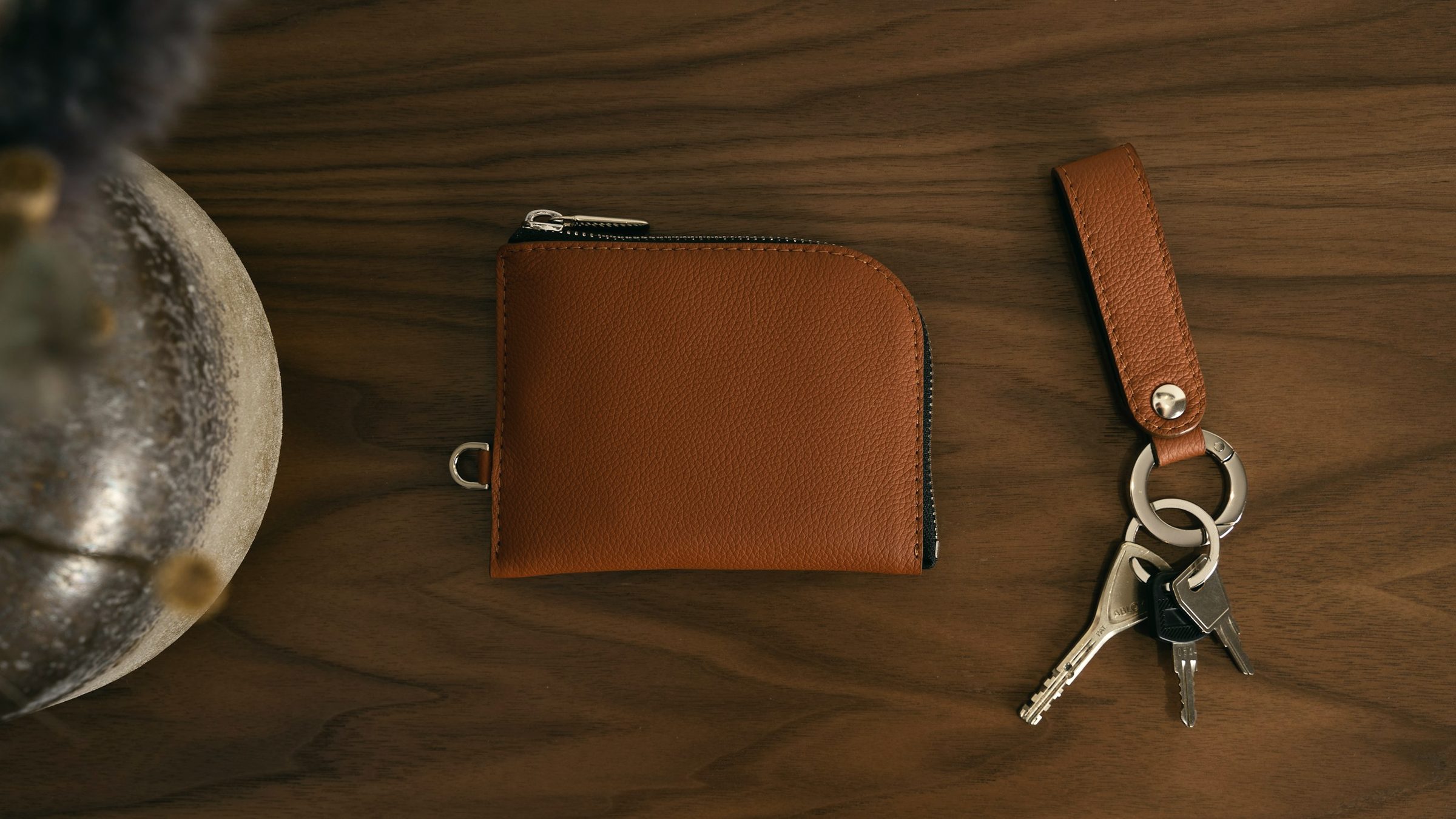
Shoes, bags and the small things you carry — in genuine leather, finished by hand.
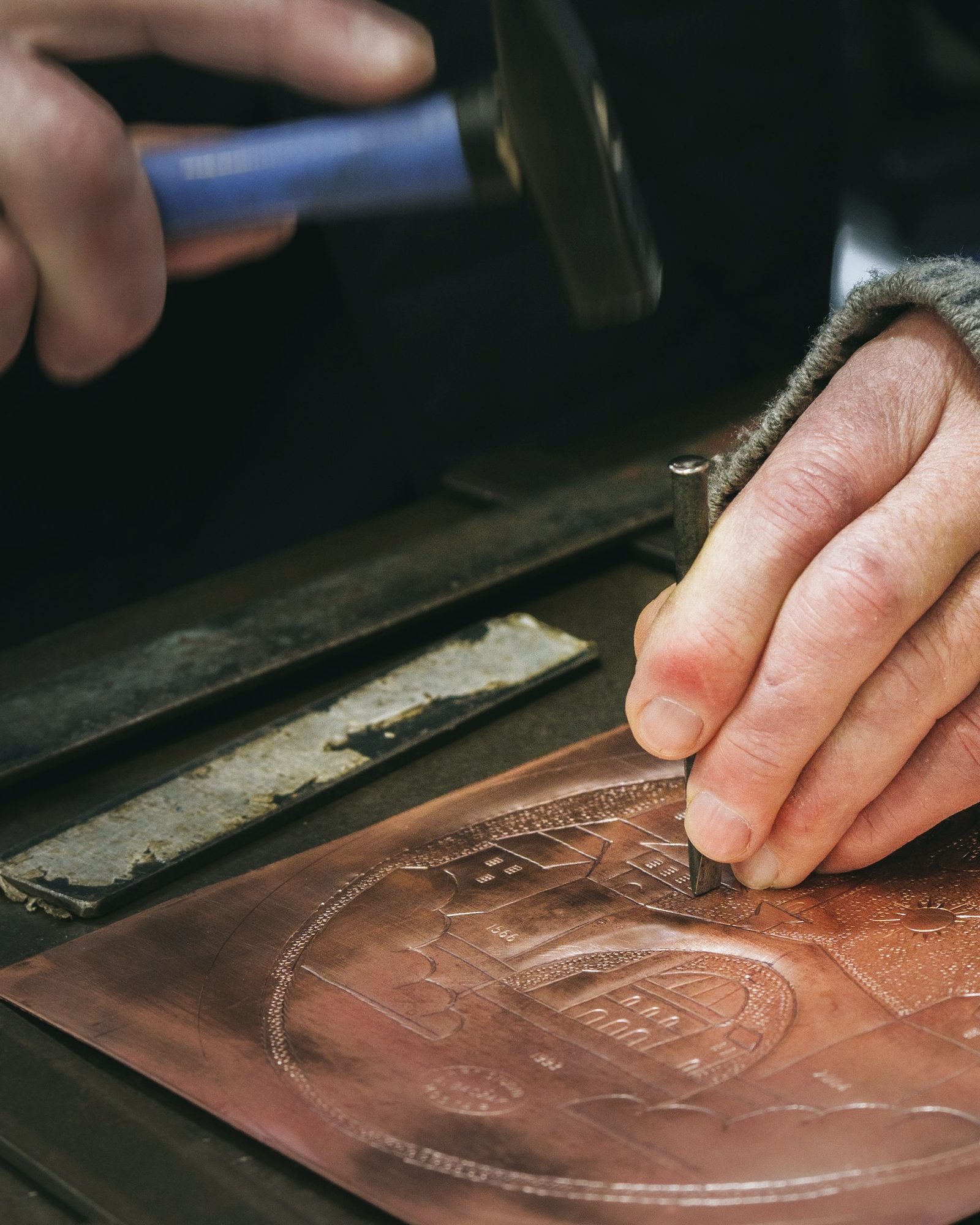
Up to three initials, debossed by hand in gold, silver or blind — a quiet signature on something you will keep.